 how-to
How Do You Handle Unexpected Structural Issues During Renovation?
Last Updated: October 25, 2026
Quick Summary
When unexpected structural issues are discovered during renovation, stop work immediately and secure the area, then document the damage with photos and video before calling a licensed structural engineer for a written assessment. The engineer's report guides your repair decisions, permits, and insurance claims.
- A structural engineer inspection typically costs $300 to $800 and takes a few hours to assess damage and recommend repairs.
- Set aside a contingency budget of 10 to 20 percent of your total project cost to cover unexpected structural repairs.
- Formalize all repair work with a signed change order that includes the scope, cost, timeline, and approval signatures before work resumes.
- Structural repair permits typically take two to four weeks to process and are required by local building departments.
- Document the discovery with photos, video, location details, date, and the contractor's written report before contacting your insurance company.
Table of Contents
- Stop Work and Assess Safety First
- What to Do When a Contractor Finds Structural Damage
- Structural Engineer Inspection for Home Renovation
- Understanding Your Renovation Contingency Budget
- Using a Renovation Change Order Template to Formalize Scope Changes
- Repair Options and Long-Term Consequences
- Permits, Code Compliance, and Inspections
- Insurance and Responsibility for Concealed Damage
- Moving Forward After Finding Unexpected Structural Issues
- Frequently Asked Questions
Stop Work and Assess Safety First
When your contractor discovers unexpected structural issues during renovation, stop work immediately.
Structural problems can hide serious safety risks: a weak wall might be close to failing, exposed wiring could cause fires, and mold poses health dangers.
Call your contractor immediately.
Stop all work in that area until a structural engineer inspects it. This pause protects your team and prevents you from making the problem worse.
What to Do When a Contractor Finds Structural Damage
Your contractor finding structural damage is not a failure on their part, most renovation projects uncover issues hidden behind walls and under floors. The key is how you respond.
Step 1: Stop Work and Secure the Area
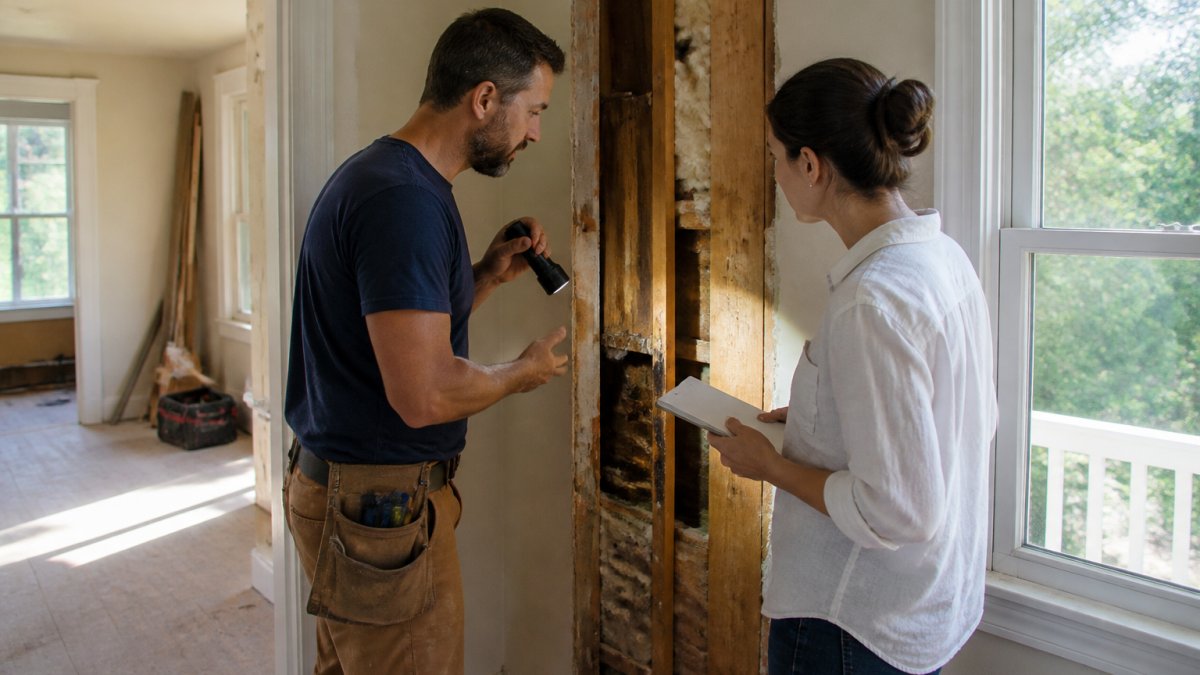
Before anyone touches anything else, stop work in the affected area. Do not continue demolition, remove additional material, or attempt a temporary fix unless a qualified professional directs it. Secure the area with barriers or tape, restrict access to essential personnel, and keep occupants and pets away. If you see signs of imminent instability, sagging floors, widening cracks, suddenly sticking doors or windows, a bowing wall, or a loud crack, evacuate and call for professional assessment before re-entering.
Step 2: Document the Finding in a Repeatable Way
Good documentation separates a manageable problem from a disputed one. Use the same routine every time:
- Photograph the area from wide, medium, and close-up angles. Include a reference object for scale (a tape measure or a coin works).
- Record a short video walking the area and narrating what you see.
- Write down the exact location (room, wall, floor, or structural element), the approximate size of the defect, and its condition (cracked, rotted, corroded, displaced, water-stained).
This record protects you if insurance becomes involved, helps the engineer understand what they are looking at, and gives you a baseline for later. Keep everything in one shared folder or project binder so it is easy to hand to an engineer, adjuster, or attorney.
Step 3: Get the Right Professional Assessment
Your contractor's observations are valuable, but they are not the final word on structural safety. You need a licensed structural engineer to assess whether the damage is cosmetic or serious, whether it affects the home's safety, and what repair options exist.
Ask your contractor specific questions and get the answers in writing:
- How extensive is the damage?
- Does it affect the structural integrity of the home?
- Could it pose immediate safety risks?
Then bring in the engineer before making any decisions. The engineer's report becomes your guide for permits, insurance, and repair scope.
Step 4: Decide and Formalize
Once you have the engineer's written assessment, decide on a course of action and formalize it: a written estimate from the contractor, a signed change order if the scope changes, and a revised schedule. Do not proceed on a verbal agreement. The principle is simple: document the finding, get the assessment, and put the decision in writing before work resumes.
Structural Engineer Inspection for Home Renovation
A structural engineer inspection is your roadmap for handling unexpected structural issues.
Schedule the inspection as soon as possible; the longer you wait, the more the problem can spread or worsen.
Ask the engineer these questions:
- Is the damage a safety concern right now?
- Will the home be unsafe if we don't repair it?
- What caused this damage?
Get everything in writing. Request a detailed report, not just a phone call summary.
A structural engineer inspection provides the professional assessment you need to understand the damage and plan repairs.
| Assessment Element | Typical Cost | Typical Duration |
|---|---|---|
| Structural engineer inspection | $300 to $800 | A few hours |
| Structural repair permit processing | Varies by jurisdiction | Two to four weeks |
Understanding Your Renovation Contingency Budget
This is where most homeowners get hurt financially: you budgeted for the remodel, not structural repairs.
A contingency budget is money set aside for exactly this situation.
If you didn't set aside a contingency, you have limited options:
- Pause the project and save more money
- Reduce the scope of the original renovation
- Finance the additional work
Talk to your contractor about what's realistic, some repairs can wait, some cannot, and prioritize what needs to happen now versus later.
Do not drain your contingency fund on the first problem. You might discover additional issues as work continues.
Using a Renovation Change Order Template to Formalize Scope Changes
A change order is a written agreement documenting changes to your renovation project.
Your change order should include:
- Description of the additional work
- Materials needed
- Labor hours and cost
Do not proceed with additional work without a signed change order. This protects both you and your contractor.
Ask your contractor for a detailed estimate before signing. The estimate should break down labor, materials, and any other costs.
Keep copies of all change orders. They become part of your project record and are important if you need to file an insurance claim.
Repair Options and Long-Term Consequences
Your structural engineer's report will outline repair options with different costs, timelines, and long-term effects. Understanding these trade-offs helps you choose correctly.
Some repairs are straightforward, like replacing a rotted beam; others are complex, like underpinning or reinforcing a foundation crack.
Ask about the long-term consequences of each repair:
- Will this repair last 20 years or 50 years?
- Will the repair affect the home's value?
- Will the repair create new problems down the road?
Cheaper is not always better: a quick fix might fail in five years, while a proper repair costs more upfront but lasts decades.
Discuss timing with your contractor. Some repairs must happen before other work can continue.
Permits, Code Compliance, and Inspections
Structural repairs almost always require permits and inspections. This is not optional. Your local building department enforces building codes to keep homes safe.
When you discover structural damage, contact your local building department.
Permits cost money and take time, a structural repair permit might take two to four weeks to process. Factor this into your timeline; rushing or skipping permits creates legal and safety problems.
Your contractor should be familiar with local permitting requirements. If they seem unsure, that's a red flag. Ask them directly about their permitting experience.
Inspections happen at specific stages of the repair work.
Insurance and Responsibility for Concealed Damage
Insurance coverage for structural damage depends on your homeowner's policy and how the damage occurred. Some damage is covered. Some is not. The practical goal is not to assume a claim will be paid, it is to document the finding, review your policy, and establish responsibility before you commit to repair costs.
Document Before You Call
Contact your insurance company as soon as you discover structural damage, but call with documentation in hand. Have ready: the date and time of discovery, photos and video of the damage, the contractor's written report, and the structural engineer's assessment if you have it. Ask specifically whether your policy covers the repair and request the answer in writing. Keep a log of every call: date, representative name, claim number, and what was said.
Understand What Policies Typically Cover and Exclude
Homeowner's policies commonly cover damage from sudden, accidental events such as storms, fires, or burst pipes (Which disasters are covered by homeowners insurance?). They often exclude damage from age, poor maintenance, gradual deterioration, or defects that existed before you bought the home. Read your policy's exclusions section and ask your agent to explain any language you do not understand. If you recently bought the home, your home inspection report becomes important because it documents what was known at the time of purchase.
Establish Responsibility
Responsibility depends on the cause. If the damage resulted from your contractor's work, for example, improper demolition or a failed temporary support, your contractor may be responsible for the repair. Discuss this directly with your contractor and document the conversation in writing. If the damage predates the project, responsibility may fall to you as the homeowner, or to a prior owner or contractor depending on disclosure and warranty issues.
Keep Communication in Writing
Save emails, claim numbers, adjuster names, and any written coverage determinations. If the insurer denies coverage, ask for the denial in writing and for the specific policy language relied on. This creates a clear record if you need to appeal or pursue another responsible party. The same documentation that supports an insurance claim also supports a conversation with your contractor about who pays for what.
Moving Forward After Finding Unexpected Structural Issues
Discovering unexpected structural issues is stressful. But it's manageable if you follow a clear process.
Your contractor plays a key role in this process. A good contractor has seen structural problems before and knows how to handle them.
At Craftsman Remodeling and Solution, we've guided many homeowners through unexpected discoveries during renovation. best practices for home renovation provides comprehensive guidance on handling these situations properly.
When structural issues arise, clear communication and honest project management are what matter most.
If you're facing structural damage during a renovation, Craftsman Remodeling can help you navigate the assessment, permitting, and repair process.
Frequently Asked Questions
What should you do first when you discover unexpected structural issues during renovation?
Stop all work immediately and do not proceed until the structural issue is assessed by a qualified professional. Secure the area to prevent further damage or safety hazards. Contact your contractor in writing to document the discovery, and request they halt work until a structural engineer or qualified inspector can evaluate the problem. Take photographs and notes of what you observe. This pause protects both your safety and your legal position regarding responsibility and cost.
How much should you budget for unexpected renovation problems?
Industry guidance suggests setting aside 10 to 20 percent of your total project budget as a contingency fund for unexpected issues. For a $50,000 renovation, that means $5,000 to $10,000 reserved. The exact amount depends on the age of your home, the scope of demolition planned, and local building conditions. Older homes and those undergoing extensive demolition typically warrant a higher contingency. Discuss your contingency strategy with your contractor early so both parties understand how change orders will be handled.
Who should assess structural damage found during a remodel?
A licensed structural engineer is the professional standard for assessing structural damage. They can determine whether the issue poses immediate safety concerns, what repairs are required, and whether permits or code compliance work is necessary. In some cases, a qualified home inspector or your contractor's structural consultant may provide an initial assessment, but significant damage should always be evaluated by a structural engineer. Their written report becomes the basis for repair decisions and cost estimates.
Will homeowners insurance cover structural damage discovered during renovation?
Coverage depends on your policy and the cause of the damage. Damage from hidden defects or poor construction may be covered, but damage caused by normal wear, age, or the contractor's work typically is not. Damage discovered during renovation may fall into a gray area regarding who is responsible. Review your homeowners policy and contact your insurer immediately when structural damage is found. Also notify your contractor in writing so there is a clear record of when the damage was discovered and by whom.
Structural problems discovered mid-project are not the end of your renovation. They're a challenge that requires careful planning and professional guidance. With the right approach and the right team, you'll resolve the issue and complete your project successfully.