 blog
NWBC vs Holderman Construction: Which Fits Your Project
Last Updated: October 26, 2026
Quick Summary
NWBC vs Holderman Construction differ primarily in focus: NWBC handles mixed residential and commercial projects across Jackson Hole, Star Valley, and Alpine at small to large scales, while Holderman Construction specializes in custom residential single-family builds and renovations in the Jackson Hole region. Choose NWBC for diverse project types and larger developments, or Holderman for focused residential expertise and detailed custom work.
- NWBC serves Jackson Hole, Star Valley, and Alpine with small to large multifamily, hospitality, and custom home projects.
- Holderman Construction focuses on single-family custom builds and renovations in the Jackson Hole region.
- Verify contractor credentials including license status, insurance certificates, bonding capacity, and business registration before deciding.
- Compare three completed projects from the last 24 months with scope, dates, contract value, and owner references.
- Review contracts side by side for base price, allowances, contingency, retainage, warranty period, and exclusion lists.
Table of Contents
- NWBC vs Holderman Construction: Service Overview and Coverage
- Project Types and Specialties: Where Each Contractor Excels
- Questions to Ask a Custom Home Builder Before Deciding
- How to Compare Contractor Bids and Pricing Models
- Contractor References and Credentials: What to Verify
- Custom Home Construction Contract Checklist
- Choosing the Right Contractor for Your Mountain Home Project
- Frequently Asked Questions
NWBC vs Holderman Construction: Service Overview and Coverage
In Jackson Hole, your contractor shapes timeline, budget, quality, and how smoothly the project goes. You can also explore Eagle Creek Alternative for Custom Renovations to broaden your understanding of contractor options in the same category.
This guide covers how to evaluate contractors, which questions matter, and how to compare bids.
| Contractor | Primary Focus | Service Area | Project Scale | Best For |
|---|---|---|---|---|
| NWBC | Mixed residential & commercial | Jackson Hole, Star Valley, Alpine | Small to large multifamily, hospitality, custom homes | Diverse project types, larger developments |
| Holderman Construction | Custom residential | Jackson Hole region | Single-family custom builds & renovations | Focused residential expertise, detailed custom work |
Project Types and Specialties: Where Each Contractor Excels
The real difference emerges when you ask what your actual project is: a custom kitchen, a bathroom renovation, a whole-home modernization, or structural work.
Ask contractors about their recent residential custom projects, not just their general portfolio.
Questions to Ask a Custom Home Builder Before Deciding
To turn two attractive profiles into a real decision, ask both contractors the same questions and record each response in writing so you can compare later without relying on memory.
Verify credentials before you ask anything else
Start with documents. Ask each contractor for:
- License number and status. Confirm it's active and in the correct classification. Check the relevant official sources yourself.
- Certificate of insurance. Ask for the certificate showing general liability and workers' comp, confirm limits and expiration date, and ask how subcontractor coverage is verified.
- Bonding capacity. Ask whether the contractor is bonded and at what level, a useful proxy for how much work they can financially carry at once.
- Business registration and standing. Check the state business registry for legal entity name, formation date, and good standing.
Compare project evidence, not marketing language
Push past the marketing language with these questions:
- "Show me three completed projects from the last 24 months similar in scope to mine." Ask for address or neighborhood, scope, dates, and final contract value versus original bid. A photo gallery without dates or scope is marketing, not evidence.
- "Which of those projects can I call the owner about?" Ask: Did the schedule hold? Did the final price match the bid, and if not, by how much and why? How were change orders handled? Would you hire them again?
- "What share of your work is residential custom versus commercial or multifamily?" The single most useful question for separating the two. A mostly commercial contractor will staff and schedule your custom home differently. Ask for the split as a percentage, not a description.
Probe the delivery process
The answers here reveal how the project will actually feel month to month:
- Communication cadence. How often will you get a written status update, and in what form?
- Change-order mechanics. Walk through a real example: who identifies the change, who prices it, how long approval takes, and what happens to the schedule while pending. Ask for the standard change-order form.
- Schedule management. Ask how they sequence trades when weather closes a site, and what their contingency plan is for delays.
- Site supervision. Who is responsible for site supervision, and what authority do they have to make decisions?
Score the answers, don't just collect them
Build a comparison sheet with one column per contractor and one row per question. Score each answer as documented, verbal-only, or evasive.
How to Compare Contractor Bids and Pricing Models
Two similar-looking bids can hide very different assumptions about scope, timeline, and risk.
A detailed bid can break down labor, materials, and overhead by phase or trade. A lump-sum bid quotes one price for the whole project. A cost-plus bid charges actual costs plus a markup. Each distributes risk differently.
When comparing bids, check: What's included in "kitchen renovation"? Does it cover permits, inspections, disposal, temporary utilities? Are tile, fixtures, and finishes allowances or specified products? What's the contingency, and how is it handled if unused?
Ask each contractor how they'd manage discovery and whether they have a process for getting approval before spending extra.
The lowest bid isn't always the best deal. Ask why bids differ.
Contractor References and Credentials: What to Verify
Before you choose, verify the contractor's credentials using relevant official sources. Learn about our credentials and track record to understand what to look for in a contractor's background.
Ask contractors to explain any bonding and insurance they carry and request documentation.
References and online reviews can offer different information. You can ask references specific questions: Did the project stay on budget? Were there surprises, and how were they handled? Would you hire them again?
Long tenure in the region, client relationships, and a portfolio of completed projects are factors readers may consider when evaluating a contractor.
BBB ratings and online reviews are incomplete data points. Consider whether the contractor's experience aligns with your project.
Custom Home Construction Contract Checklist
A contract is where the differences between two contractors become enforceable. This checklist covers the items that most often cause disputes on custom residential work, with notes on what to compare between NWBC and Holderman Construction.
Scope, allowances, and the specification
- Written scope by phase and trade. List every phase (site work, foundation, framing, rough-in, finishes, punch list) and trade, with quantities where possible. "Kitchen renovation" is not a scope; a line-item list of cabinets, countertops, appliances, tile, fixtures, and labor is.
- Allowances versus specified products. Ask whether finishes are specified by brand and model or carried as allowances. An allowance is a placeholder; final cost depends on your selections. Compare allowance amounts line by line; a low base bid with generous allowances can end up pricier than a higher bid with specified products.
- Exclusions. Every bid excludes something. Get the exclusion list in writing and compare side by side.
- Contingency. Ask whether the contract carries a contingency line, what percentage, and who controls it. A contingency that reverts to the owner if unused differs greatly from one that stays with the contractor.
Price, payment, and change orders
- Contract type. Confirm lump-sum, cost-plus, or guaranteed maximum price (GMP).
- Payment schedule. Ask what documentation accompanies each draw request and whether conditional lien waivers from subcontractors and suppliers come with each payment.
- Change-order process. The contract should state who can authorize a change, in what form, how it's priced, and how it affects the schedule. Ask for the standard form and a completed sample from a past project.
- Retainage and final payment. Confirm whether retainage is held and at what percentage, and what conditions precede final payment (final inspection, punch list completion, warranty documents, lien waivers from all subs).
Schedule, permits, and inspections
- Milestone schedule. Attach a schedule with start date, key milestones, substantial completion date, and the process for adjustments. Ask how weather days are treated and whether the schedule includes a weather contingency.
- Permits and inspections. Confirm who pulls permits, schedules inspections, and pays fees. Ask about the contractor's experience with the relevant local jurisdiction.
- Utility coordination. Confirm who coordinates utility connections, meter sets, and temporary power.
Warranty, insurance, and dispute resolution
- Warranty terms. Ask for the written warranty, including what's covered, for how long, how claims are submitted, and any response-time commitment. Compare side by side.
- Insurance during construction. Ask who carries builder's risk coverage and what the contractor's general liability policy covers.
- Dispute resolution. Note whether the contract requires mediation, arbitration, or litigation, and where venue is set. Review the dispute-resolution terms before signing.
Compare the two contracts directly
Compare the base price, total allowances, contingency, retainage, warranty period, and exclusion lists side by side.
Choosing the Right Contractor for Your Mountain Home Project
Your choice of contractor depends on project type, timeline, and how you want to work.
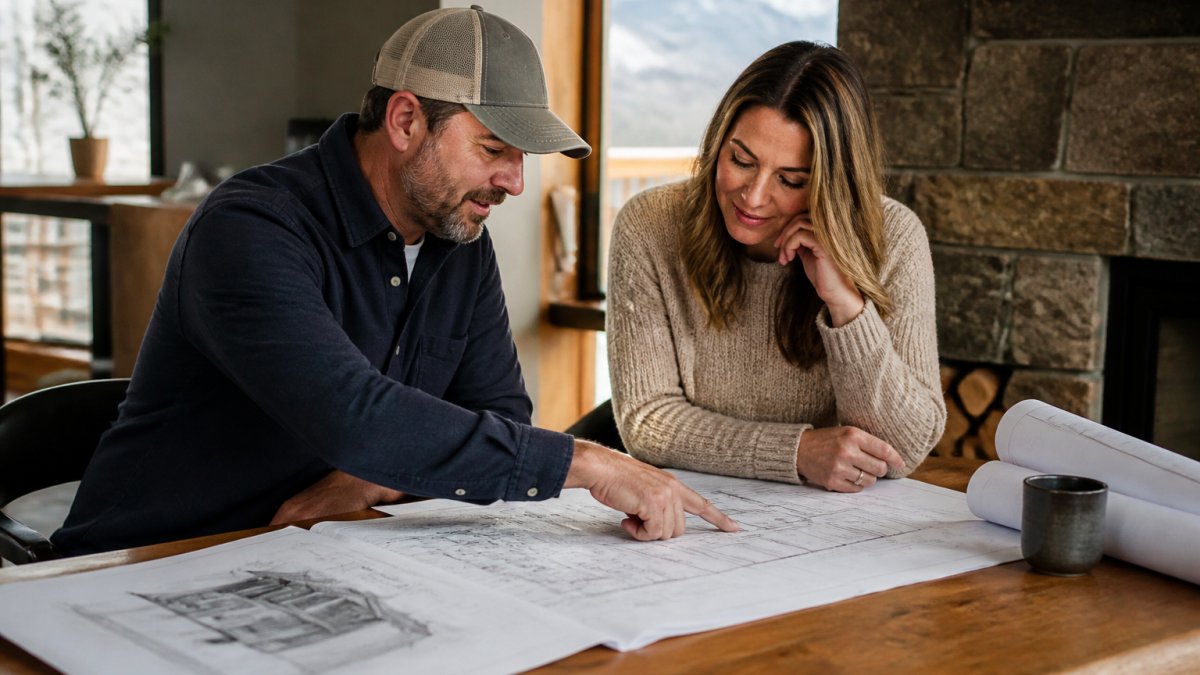
Consider how a contractor's experience aligns with your project scope and the work you want done.
The contractor shapes your experience as much as the result. Look for clear communication, professional handling of surprises, local climate and terrain knowledge, and references who'd hire them again. Ask hard questions before you sign, and get everything in writing.
Craftsman Remodeling and Solution is based in Jackson Hole, Wyoming, and prioritizes meticulous craftsmanship, open communication, and honest project management.
Choose carefully, verify thoroughly, and consider who you want in your home.
Frequently Asked Questions
What services does NWBC offer compared to Holderman Construction?
When evaluating contractors, confirm which services match your specific project scope before requesting a bid.
How should I compare custom home builders like NWBC and Holderman Construction?
Start by asking contractors about their credentials. Request project portfolios and references specific to work similar to yours. Compare their communication approach, project timeline estimates, and how they handle change orders. Review independent reviews and BBB ratings. Request written bids that explain the proposed scope and costs so you can compare them.
What should a custom home construction contract include?
Review the contract's project scope, materials, costs, timeline, payment schedule, change-order procedures, warranty terms, and dispute-resolution terms. Consider having an attorney review the contract before signing.
How do I check a contractor's references and credentials?
Request client references and contact them directly to ask about project quality, timeline adherence, communication, and how the contractor handled unexpected issues. Ask contractors to explain any credentials and insurance they carry, and request documentation. Review available ratings and complaint information. Ask about relevant experience with local building requirements and inspections. Request photos of completed projects similar to yours.
Selecting a contractor is one of the most important decisions in a renovation. The process takes time, but the clarity you gain, understanding each contractor's strengths, asking the right questions, comparing bids honestly, protects your budget and your sanity. Whether you choose NWBC, Holderman Construction, or another contractor, make sure they're someone you trust to handle your home with the craftsmanship and respect it deserves. Your home is too important to settle for less.